EXTENSIVE CLINICAL AND PRECLINICAL PROGRAMS

Our portfolio includes Kv7 ion channel modulation for epilepsy and mood disorders; extracellular protein degradation for immunological diseases; TRPM3 antagonism for pain disorders; TYK2/JAK1 inhibition for neuroinflammatory disorders; myostatin inhibition for neuromuscular and metabolic diseases, including SMA and obesity; antibody recruiting bispecific molecules; and antibody drug conjugates for cancer.

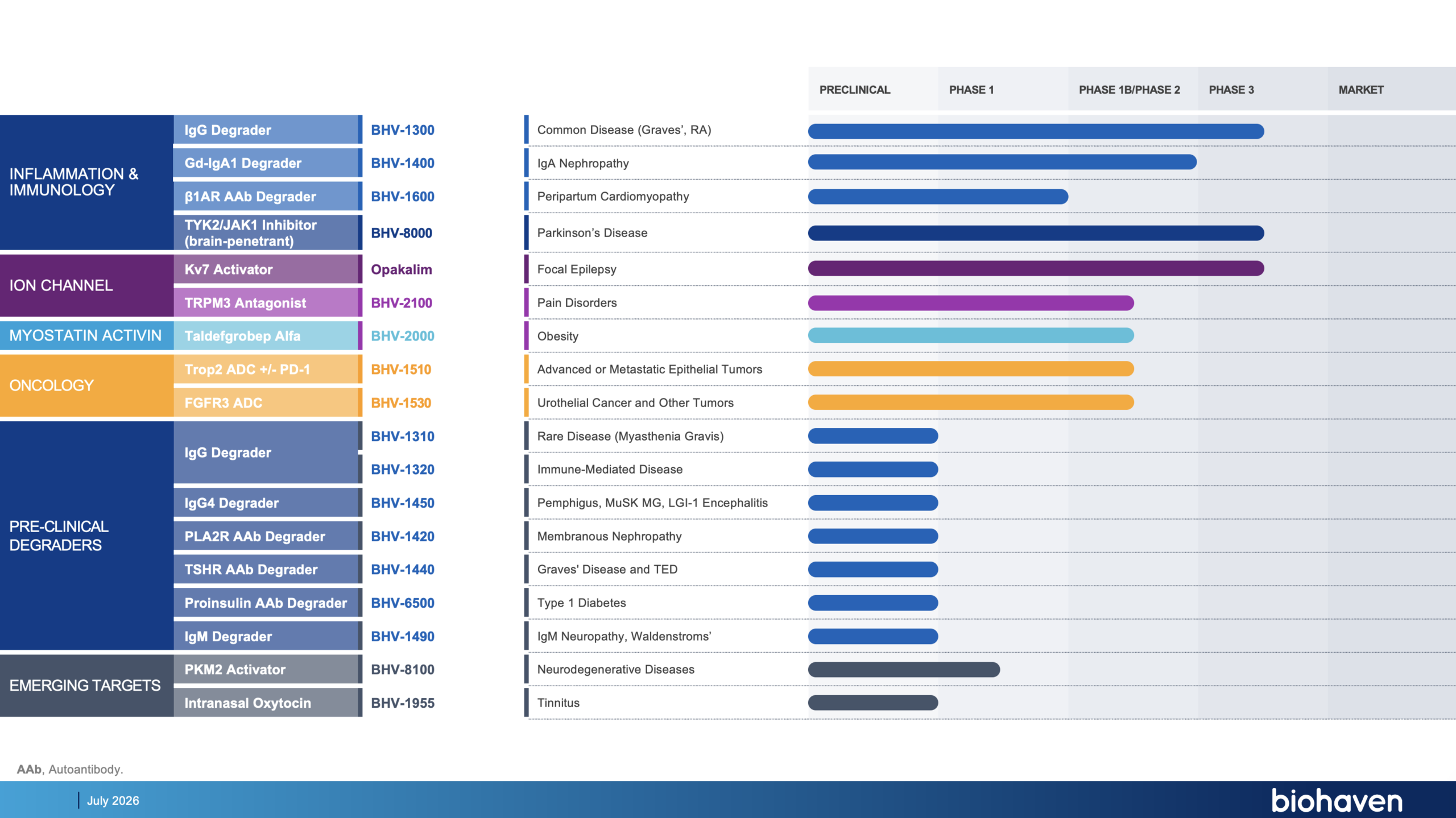
FULL PIPELINE
external

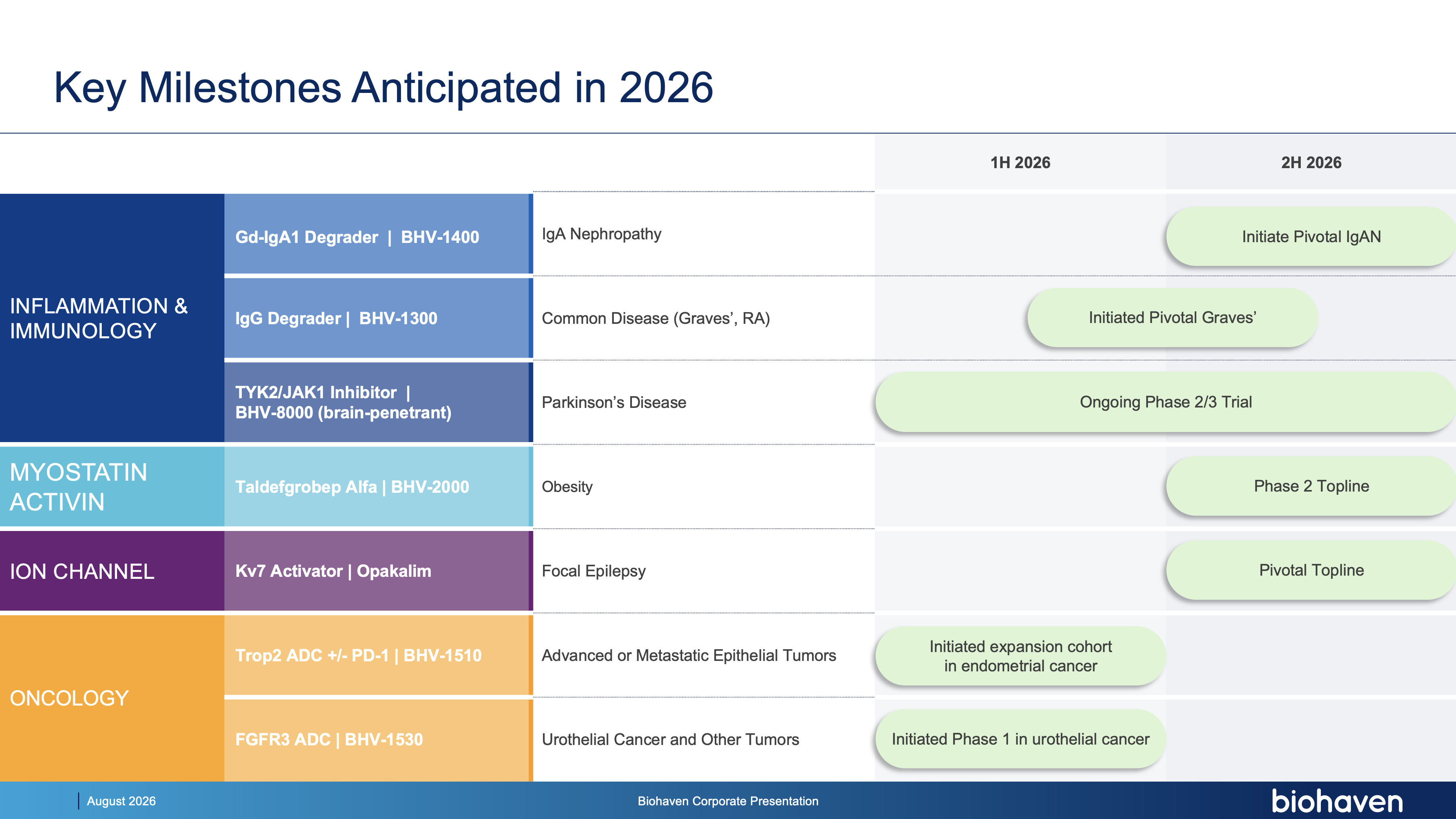
2026 MILESTONES

external

EXPLORE OUR INTERACTIVE PIPELINE BELOW FOR MORE DETAILS

PRECLINICALPHASE 1PHASE 2PHASE 3FILED

Spinal Muscular Atrophy

BHV-2000

PHASE 3

INDICATION:

Spinal muscular atrophy (SMA) is a rare genetic neurodegenerative disorder characterized by the loss of motor neurons, atrophy of the voluntary muscles of the limbs and trunk, and progressive muscle weakness that is often fatal and typically diagnosed in young children. The underlying pathology of SMA is caused by insufficient production of the SMN (survival of motor neuron) protein, essential for the survival of motor neurons, and is encoded by two genes, SMN1 and SMN2. In the US, SMA affects approximately 1 in 11,000 births, and about 1 in every 50 Americans is a genetic carrier.

RATIONALE:

Taldefgrobep is an investigational, muscle-targeted recombinant protein with the potential to enhance muscle mass and strength in people living with SMA when used in combination with other approved treatments. Taldefgrobep targets myostatin, a natural protein that limits skeletal muscle growth, through two mechanisms: lowering myostatin directly and blocking key downstream signaling mechanisms. Myostatin inhibition is a potential therapeutic strategy for children and adults with a range of neuromuscular conditions for whom active myostatin can limit the skeletal muscle growth needed to achieve developmental and functional milestones.

Obesity

BHV-2000

PHASE 1

INDICATION:

Obesity is a disease of excess and/or abnormal deposits of adipose tissue and a current global public health crisis. By 2030, it is expected that nearly one billion people will be living with obesity, including 50% of the adult and 25% of the adolescent US population. The primary driver of obesity-related morbidity and mortality is metabolically active visceral adipose tissues and associated deposits in and around organs such as the heart, liver, kidneys, and muscle.

RATIONALE:

Taldefgrobep is an investigational fusion protein with the potential to induce physical and metabolic changes that are highly relevant to individuals living with overweight and obesity. Taldefgrobep targets myostatin, a natural protein that limits skeletal muscle growth. Taldefgrobep’s binding of myostatin prevents activin receptor signaling, resulting in muscle hypertrophy. Current anti-obesity therapies achieve weight loss through the reduction in both fat mass and lean muscle mass. Taldefgrobep offers a potential novel approach to addressing the primary pathology of obesity. Through its unique mechanism of action, taldefgrobep may be able to meaningfully reduce total body and visceral adipose tissue volumes and improve insulin sensitivity, while increasing lean muscle mass.

PRECLINICALPHASE 1PHASE 2PHASE 3FILED

Focal Epilepsy

Opakalim (BHV-7000)

PHASE 3

INDICATION:

Epilepsy affects approximately 3.5 million Americans and more than 50 million people worldwide; approximately 1/3 are refractory to available anti-seizure medications (ASMs). After starting an ASM, 80% of patients will experience burdensome adverse events, which can include somnolence, dizziness, cognitive dysfunction, and mood disturbances. Epilepsy can also be lethal; each year, more than one in 1,000 people with epilepsy die from SUDEP (sudden, unexpected death of someone with epilepsy).

RATIONALE:

Opakalim (BHV-7000) is a potent, selective activator of Kv7.2/7.3 potassium channels, a clinically validated target to regulate the hyperexcitable state in epilepsy. Opakalim (BHV-7000) is structurally and pharmacologically distinct from other potassium channel activators and demonstrates minimal GABAA receptor activation, potentially providing better tolerability compared to other ASMs. Opakalim (BHV-7000) was potent in the maximal electroshock (MES) preclinical epilepsy model without adverse neurobehavioral or motor effects and was well-tolerated in a Phase 1 SAD/MAD clinical study without the central nervous system (CNS) adverse events typical of anti-seizure medications. A Phase 1 EEG biomarker study confirmed evidence of target engagement in the CNS.

Generalized Epilepsy

Opakalim (BHV-7000)

PHASE 3

INDICATION:

Epilepsy affects approximately 3.5 million Americans and more than 50 million people worldwide; approximately 1/3 are refractory to available anti-seizure medications (ASMs). After starting an ASM, 80% of patients will experience burdensome adverse events, which can include somnolence, dizziness, cognitive dysfunction, and mood disturbances. Epilepsy can also be lethal; each year, more than one in 1,000 people with epilepsy die from SUDEP (sudden, unexpected death of someone with epilepsy).

RATIONALE:

Opakalim (BHV-7000) is a potent, selective activator of Kv7.2/7.3 potassium channels, a clinically validated target to regulate the hyperexcitable state in epilepsy. Opakalim (BHV-7000) is structurally and pharmacologically distinct from other potassium channel activators and demonstrates minimal GABAA receptor activation, potentially providing better tolerability compared to other ASMs. Opakalim (BHV-7000) was potent in the maximal electroshock (MES) preclinical epilepsy model without adverse neurobehavioral or motor effects and was well-tolerated in a Phase 1 SAD/MAD clinical study without the central nervous system (CNS) adverse events typical of anti-seizure medications. A Phase 1 EEG biomarker study confirmed evidence of target engagement in the CNS.

Major Depressive Disorder

Opakalim (BHV-7000)

PHASE 2

INDICATION:

Major depressive disorder (MDD) is a highly prevalent disorder with significant disease burden and unmet need. Approximately 21 million adults (8.3%) in the US have had at least one depressive episode, and there are over 1 million suicides per year globally and rising. Significant morbidity and mortality are attributable to MDD worldwide due to its chronic, recurrent nature, as well as its impact on mood, cognition, behavior, and suicidality. Currently available treatments for MDD often fail patients, and are limited by adverse events and inadequate efficacy, leaving more than 1/3 of patients resistant to antidepressant drug treatment.

RATIONALE:

Opakalim (BHV-7000) is a potent, selective activator of Kv7.2/7.3 potassium channels. Kv7 activation normalizes the pathological hyperexcitability that contributes to depression and has demonstrated efficacy in multiple preclinical models. Clinical proof-of-concept studies with Kv7 activators have demonstrated antidepressant activity and provide strong clinical support for Kv7 activation as a novel treatment for depression and anhedonia.

PRECLINICALPHASE 1PHASE 2PHASE 3FILED

Pain Disorders

BHV-2100

PHASE 2

INDICATION:

Pain Disorders

RATIONALE:

BHV-2100 is a potential first-in-class, orally administered, highly selective TRPM3 antagonist that is being developed for the treatment of pain disorders. TRPM3 is a novel druggable calcium-permeable ion channel in the transient receptor potential (TRP) channel family. TRPM3 is expressed in the relevant human tissue types for pain, and both preclinical models and human genetics implicate TRPM3 in pain. BHV-2100 offers a novel, non-addictive treatment approach to pain and has demonstrated potent pain reversal in preclinical models; favorable safety, tolerability, and pharmacokinetic properties in Phase 1 clinical studies; and early clinical proof of concept in pain.

TYK2/JAK1 Inhibitor
(brain-penetrant)

PRECLINICALPHASE 1PHASE 2PHASE 3FILED

Parkinson’s Disease

BHV-8000

PHASE 3

INDICATION:

Parkinson’s Disease

RATIONALE:

Parkinson’s Disease (PD) is a progressive, neurodegenerative disorder that is characterized by worsening tremor, muscle rigidity, and slow, imprecise movements along with a range of non-motor symptoms such as impaired sleep and cognition. Strong evidence now exists that neuroinflammation is a critical driver of neurodegeneration in PD. Abnormal genetic variants in the TYK2/JAK1 pathway have been found to be associated with disease expression. Epidemiologic data also support an autoimmune component to PD and indicate the ability to mitigate that risk by targeting pathways associated with TKY2/JAK1 function. Further, abnormal immune activation including the presence of activated microglia, T-cell infiltration into the central nervous system, and elevated levels of a range of pro-inflammatory cytokines, has been consistently found in PD patients; findings that have been prevented or reversed via modulation of the JAK/STAT pathway in an animal PD model. BHV-8000 represents a novel and promising therapeutic approach for targeting symptoms and disease progression in this debilitating, neurodegenerative disease.

Prevention of Amyloid Therapy Induced ARIA

BHV-8000

PHASE 1

INDICATION:

Prevention of Amyloid Therapy Induced ARIA

RATIONALE:

ARIA represent a spectrum of imaging abnormalities seen on brain MRI in individuals living with Alzheimer’s Disease (AD) who are initiating amyloid-modifying therapies. Emerging data demonstrate the role of a mixed inflammatory response in the progression of ARIA, including complement activation as well as glial cell and peripheral T cell infiltration. This immune response contributes to a loss of vascular integrity and subsequent leakage of proteinaceous fluid (ARIA-E) or blood (ARIA-H) into the peri-arterial space and brain parenchyma resulting in the changes seen on MRI. ARIA are among the most common adverse events complicating the use of anti-amyloid monoclonal antibodies for the treatment of people living with early AD. These events generally occur early after the initiation of anti-amyloid therapy (within the first 3 months). Among the major risk factors for ARIA is APOE-ε4 carrier status. Homozygotes have a meaningfully higher rate of ARIA (~40%) compared to heterozygotes (~15-20%) and those who are non-carriers (~10-15%). While most ARIA events are asymptomatic, serious radiographic and life-threatening cases can occur. Notably, the long-term health consequences of asymptomatic ARIA are not well understood. Anti-inflammatory medications including corticosteroids have demonstrated benefit in the treatment of ARIA events. BHV-8000, as a brain-penetrant selective TYK2/JAK1 inhibitor, has the potential to disrupt the mixed inflammatory response driving ARIA and may represent a novel and promising approach to the prevention of these events in individuals living with AD who are undergoing anti-amyloid therapy.

Alzheimer’s Disease

BHV-8000

PHASE 1

INDICATION:

Alzheimer’s Disease

RATIONALE:

Alzheimer’s Disease (AD) is a progressive neurodegenerative disorder that is characterized by cognitive and functional decline. AD represents the most common neurodegenerative disease worldwide, accounting for approximately two-thirds of all cases of dementia and affecting up to 20% of individuals older than 80 years. Strong evidence now exists that chronic inflammation, including persistent activation of the central innate and the peripheral adaptive immune systems, play an important role in the development of AD, progression of its pathognomonic biological changes, and stereotypical clinical manifestations. Epidemiologic data demonstrate an increased incidence in AD among individuals living with autoimmune disease and the potential for risk mitigation with the chronic use of anti-inflammatory medications. Abnormal genetic variants in the TYK2/JAK1 pathway have been found to be associated with Alzheimer’s disease expression. Further, evidence of a hyperactive and destructive immune response that includes microglial activation, reactive astrocytosis, and the infiltration of peripheral effector T-cells into the brain, along with a resulting storm of inciting cytokines, has been consistently found in the tissues of AD patients; findings that have been prevented or reversed via modulation of the JAK/STAT pathway in an AD preclinical models. BHV-8000 represents a novel and promising therapeutic approach for targeting symptoms and disease progression in this debilitating, neurodegenerative disease.

Multiple Sclerosis

BHV-8000

PHASE 1

INDICATION:

Multiple Sclerosis

RATIONALE:

Multiple Sclerosis (MS) is an immune-mediated inflammatory disease in which over-active immune cells and microglia drive chronic neuroinflammation resulting in neuronal injury, death, gliosis, and demyelination of axons in the central nervous system. Genetic evidence supports TYK2 as a pathogenic driver of MS, and nonclinical data suggest that the JAK/STAT pathway regulates differentiation and function of Th1 and Th17 cells which are responsible for development of inflammation and demyelination in animal models of MS. Clinical literature supports the presence of abnormal immune activation in MS, and targeting these pathways has demonstrated benefit in MS. Blocking TYK2/JAK1 signaling with a highly potent, selective, brain-penetrant agent has the potential to slow disease progression through modulation of pathogenic microglial cells, which drive cognitive and physical disabilities in MS, and inhibiting Th1 and Th17 lymphocytes which drive MS neuroinflammation and myelitis. CNS targeting of immune cells with BHV-8000 may enable a promising therapeutic approach for addressing disability progression, cognitive impairment, and reduced quality of life in both relapsing and progressive forms of MS.

IgG Degrader

PRECLINICALPHASE 1PHASE 2PHASE 3FILED

Common Disease (Graves’, RA)

BHV-1300

PHASE 1

INDICATION:

Common Disease (Graves’, RA)

RATIONALE:

Biohaven’s Molecular Degraders of Extracellular Proteins (“MoDE™”) Platform is the first clinically-validated technology enabling degradation of extracellular disease-causing proteins. Each MoDE is a bispecific molecule that targets pathogenic proteins and directs them to the liver (or other organ systems) for rapid and deep degradation by the endosomal/lysosomal pathway. BHV-1300, Biohaven’s lead MoDE has demonstrated observed IgG reductions up to 87% from baseline and has been safe and well-tolerated in phase 1 clinical studies. BHV-1300 is in development for Graves’ disease, with additional follow-on studies in other autoimmune diseases to be pursued. Therapeutic pan-IgG depletion using Biohaven’s proprietary MoDE™ platform technology is expected to have significant potential benefit for multiple diseases.

Rare Disease (Myasthenia Gravis)

BHV-1310

PRECLINICAL

INDICATION:

Rare Disease (Myasthenia Gravis)

RATIONALE:

Biohaven’s Molecular Degraders of Extracellular Proteins (“MoDE™”) Platform is the first clinically-validated technology enabling degradation of extracellular disease-causing proteins. Each MoDE is a bispecific molecule that targets pathogenic proteins and directs them to the liver (or other organ systems) for rapid and deep degradation by the endosomal/lysosomal pathway. High circulating levels of IgG antibodies (monoclonal or polyclonal gammopathy) drive conditions such as myasthenia gravis, CIDP, thyroid eye disease, Graves’ disease, rheumatoid arthritis, systemic lupus erythematosus, pemphigus vulgaris, and many other diseases. In preclinical studies, BHV-1310 demonstrates 90% IgG depletion with a single dose. Therapeutic pan-IgG depletion using Biohaven’s proprietary MoDE™ platform technology is expected to have significant potential benefit for multiple diseases.

Gd-IgA1 TRAP Degrader

PRECLINICALPHASE 1PHASE 2PHASE 3FILED

IgA Nephropathy

BHV-1400

PHASE 1

INDICATION:

IgA Nephropathy

RATIONALE:

Potential first-in-class TRAP degrader, BHV-1400, for IgA nephropathy rapidly, deeply, and selectively reduces Gd-IgA1 up to 81% with a single dose administered subcutaneously. IgA nephropathy (“IgAN”) is the most common primary glomerulonephritis world-wide. Most often diagnosed in early adulthood, IgAN progresses to end-stage renal disease in the majority of patients in their lifetime, with most patients progressing to renal failure within 10-15 years and mean age of kidney failure or death occurring at age 48 years. Named for the deposition of IgA within the glomerular mesangium, IgAN is caused by the excess production of Gd-IgA1, which is bound by autoantibodies and forms complexes that deposit in the glomerular mesangium triggering a profibrotic and proinflammatory cascade, ultimately leading to renal failure. BHV-1400 brings precision immunology to the treatment landscape of IgAN as it selectively removes galactose-deficient IgA1 (Gd-IgA1), the pathogenic antibody driver of the disease while sparing healthy antibodies IgA, IgG, IgE, and IgM. Preservation of immunoglobulins, the complement system, and cell-mediated and humoral immunity offers key differentiation against immunosuppressive approaches. BHV-1400 represents a novel and promising therapeutic approach for progressive, debilitating renal disease.

β1AR Autoantibody
Degrader

PRECLINICALPHASE 1PHASE 2PHASE 3FILED

Peripartum Cardiomyopathy

BHV-1600

PHASE 1

INDICATION:

Peripartum Cardiomyopathy

RATIONALE:

Cardiac beta-1 adrenergic receptors (β1AR), when activated, increase heart rate, contractility, and cardiac output. There is a high prevalence of agonistic autoantibodies that activate cardiac β1AR in multiple cardiomyopathies, which lead to dilation of the heart and heart failure. The presence of β1AR autoantibodies correlates with a poor prognosis, and removing or neutralizing β1AR autoantibodies has shown potential therapeutic benefits. BHV-1600 is a bifunctional MoDE designed to selectively degrade pathogenic β1AR autoantibodies and should augment the limited efficacy of beta-blockers, providing a novel approach to treating multiple cardiomyopathies.

Trop2 ADC +/- PD1

PRECLINICALPHASE 1PHASE 2PHASE 3FILED

Advanced or Metastatic Epithelial Tumors

BHV-1510

PHASE 1

FGFR3 ADC

PRECLINICALPHASE 1PHASE 2PHASE 3FILED

Urothelial Cancer & Other Tumors

BHV-1530

PHASE 1

CD30 ADC

PRECLINICALPHASE 1PHASE 2PHASE 3FILED

Hodgkin Lymphoma

BHV-1500

PRECLINICAL

Undisclosed Targets

PRECLINICALPHASE 1PHASE 2PHASE 3FILED

Merus and GeneQuantum Collaborations

PRECLINICAL

FULFILLING OUR COMMITMENT TO PATIENTS

Biohaven has earned its reputation as a leader in scientific innovation. Our portfolio includes treatments for a range of diseases with unmet medical needs. We are proud of our pioneering science and a growing pipeline built by our own discoveries and collaborations with others. We continue to apply scientific breakthroughs to make a difference in the lives of people living with debilitating diseases around the world. At Biohaven, we believe that "DAYS MATTER™" and are committed to pursuing innovative treatments for patients.

Developing novel therapies that transform lives is a partnership with you.

Let’s start the journey together.